How the cast in-situ concrete pumped chimney lining system works
The basic concept of the system is simple but extremely effective.
A rubber former (this looks like a sausage skin!) is inserted precisely into position down the entire length of the chimney flue and inflated to the correct diameter.
Special techniques are used to keep the former centralised, even if the flue has a 45° bend.
An insulated lightweight concrete material is pumped into the flue from the top of the chimney stack filling all voids, cracks and damaged joints.
A steel register plate is fitted at the bottom of the chimney stack so as to keep the concrete contained in the chimney itself.
CLICK OUR MAP TO VIEW THE AREAS THAT OUR TEAMS OF CHIMNEY LINING SPECIALISTS COVER IN HELPING CUSTOMERS OVERCOME THEIR CHIMNEY PROBLEMS
When the material has hardened, the former is deflated and removed leaving a perfectly smooth cylindrical flue. Then the woodburning stove or open fire can be connected to the lining.
The chimney can be come clogged due to in sufficient chimney sweeping. The chimney should be swept once for every three months of continuous burning. That way it minimises the effects of clogged arteries and also keeps the new lining at its required diameter giving you a good 'draw'.
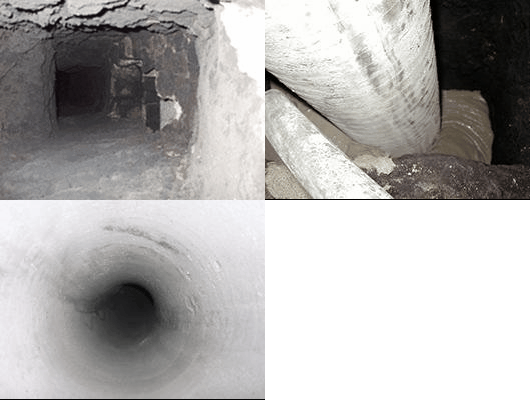
Picture 1: This is before the process begins with the chimney unlined
Picture 2: This shows the inflated former in the chimney void and the chimney being pumped with the lightweight concrete material which creates the lining
Picture 3: This shows the inside of the newly pumped concrete lining with the former deflated and removed